
Steuerung einer Funksteckdose mit Arduino (Grundlagen siehe RF Link). Eingebauter WebServer mit Oberfläche für Mobilgeräte (jQuery mobil).

Hardware
|
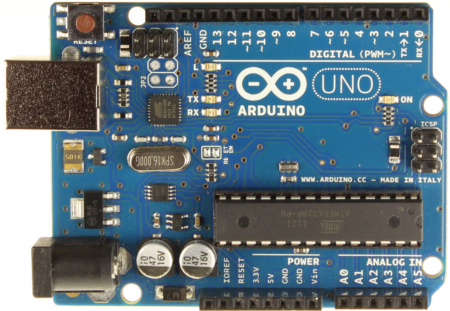
Arduino |
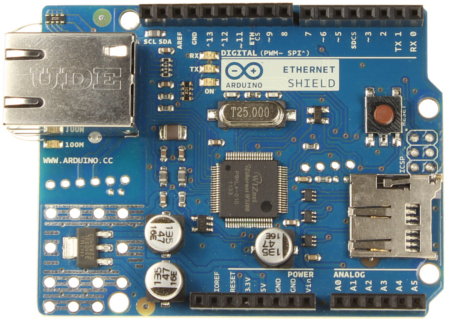
Arduino Ehternet Shield |
|
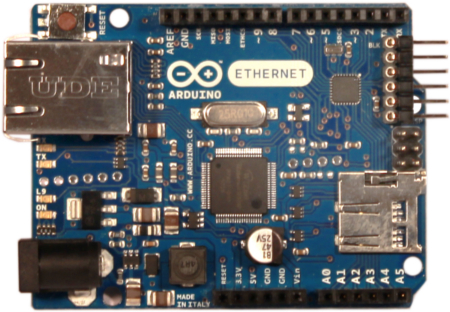
Arduino Ethernet |
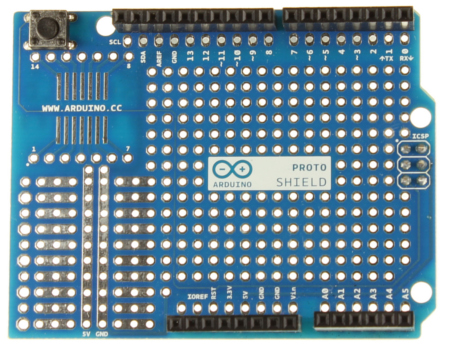
Arduino Proto Shield |
|
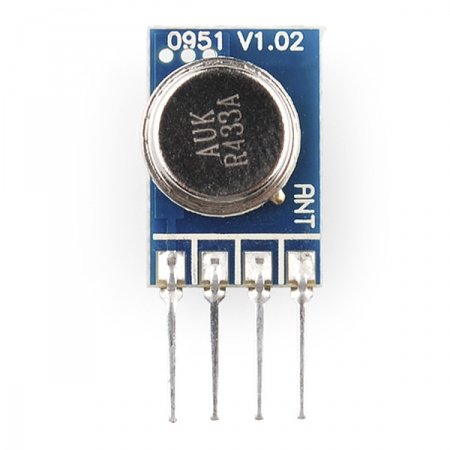
RF Link 434 MHz Sender |
Zusammengebaut |

Screenshots
|
remote.html |
timer.html |

Sourcecode
Compiled with Arduino 0022
#include "SPI.h"
#include "Ethernet.h"
#include "WebServer.h"
#include <Udp.h>
#include <stdio.h>
#include <Time.h>
#include <MsTimer2.h>

#define AON         "000111011111011010100011"
#define AOFF        "000100001000110101110011"
#define BON         "000110001011110011001010"
#define BOFF        "000110010101011110111010"
#define CON         "000110010101011110111010"
#define COFF        "000100011100001011100001"
#define DON         "000110111010101100101000"
#define DOFF        "000101100010000000001000"
#define MASTERON    "000110101101100111011101"
#define MASTEROFF   "000100011100001011101101"

#define TIMER2 60000
#define AlarmHMS(_hr_, _min_, _sec_) (_hr_ * SECS_PER_HOUR + _min_ * SECS_PER_MIN + _sec_)

static uint8_t mac[6] = { 0x02, 0xAA, 0xBB, 0xCC, 0x00, 0x22 };
static uint8_t ip[] = { 192, 168, 178, 213 };
unsigned int localPort = 8888;      // local port to listen for UDP packets
byte timeServer[] = { 192, 168, 178, 1};
const int NTP_PACKET_SIZE= 48; // NTP time stamp is in the first 48 bytes of the message
byte packetBuffer[ NTP_PACKET_SIZE]; //buffer to hold incoming and outgoing packets
short rc_pin=8;  // der Pin auf dem der Datenpin des Senders angeschlossen ist.
short vc_pin=10; // der Pin auf dem VCC des Senders angeschlossen ist.
unsigned long epoch = 0;
boolean automatic = true;
int masterOnHour = 18;
int masterOnMinute = 0;
int masterOffHour = 22;
int masterOffMinute = 0;
int NTPCounter = 0;
boolean NTPUpdate = false;

/* all URLs on this server will start with /buzz because of how we
 * define the PREFIX value.  We also will listen on port 80, the
 * standard HTTP service port */
#define PREFIX ""
WebServer webserver(PREFIX, 80);

/* This command is set as the default command for the server.  It
 * handles both GET and POST requests.  For a GET, it returns a simple
 * page with some buttons.  For a POST, it saves the value posted to
 * the buzzDelay variable, affecting the output of the speaker */
void remoteCmd(WebServer &server, WebServer::ConnectionType type, char *, bool)
{
  if (type == WebServer::POST)
  {
    bool repeat;
    char name[16], value[16];
    do
    {
      /* readPOSTparam returns false when there are no more parameters
       * to read from the input.  We pass in buffers for it to store
       * the name and value strings along with the length of those
       * buffers. */
      repeat = server.readPOSTparam(name, 16, value, 16);

      /* this is a standard string comparison function.  It returns 0
       * when there's an exact match.  We're looking for a parameter
       * named "buzz" here. */
      if (strcmp(name, "remote") == 0)
      {
	/* use the STRing TO Unsigned Long function to turn the string
	 * version of the delay number into our integer buzzDelay
	 * variable */
         int val = strtoul(value, NULL, 10);
         char code[24];
         switch(val) {
           case 11: // A an
             strcpy(code, AON);
           break;
           case 10: // A aus
             strcpy(code, AOFF);
           break;
           case 21: // B an
             strcpy(code, BON);
           break;
           case 20: // B aus
             strcpy(code, BOFF);
           break;
           case 31: // C an
             strcpy(code, CON);
           break;
           case 30: // C aus
             strcpy(code, COFF);
           break;
           case 41: // D an
             strcpy(code, DON);
           break;
           case 40: // D aus
             strcpy(code, DOFF);
           break;
           case 51: // Master an
             strcpy(code, MASTERON);
           break;
           case 50: // Master aus
             strcpy(code, MASTEROFF);
           break;
         }
         sendCode(code);
      }
    } while (repeat);

    // after procesing the POST data, tell the web browser to reload
    // the page using a GET method.
    server.httpSeeOther(PREFIX "/remote.html");
    return;
  }

  /* for a GET or HEAD, send the standard "it's all OK headers" */
  server.httpSuccess();

  /* we don't output the body for a HEAD request */
  if (type == WebServer::GET)
  {
    /* store the HTML in program memory using the P macro */
    P(remote) =
"<!DOCTYPE html>"
"<html>"
"  <head>"
"  <meta name='viewport' content='width=device-width, initial-scale=1'>"
"  <title>Steuerung Powerfix Steckdosen</title>"
"  <link rel='stylesheet' href='http://code.jquery.com/mobile/1.0/jquery.mobile-1.0.min.css' />"
"  <script src='http://code.jquery.com/jquery-1.6.4.min.js'></script>"
"  <script src='http://code.jquery.com/mobile/1.0/jquery.mobile-1.0.min.js'></script>"
"	<script>"
"	$(document).bind('mobileinit', function(){"
"	  $.mobile.touchOverflowEnabled = true;"
"	});"
"	</script>"
"</head>"
"<body>"
"<div data-role='page'>"
"  <div data-role='header' data-position='fixed'>"
"    <h1>Remote</h1>"
"    <a href='options.html' data-icon='star' class='ui-btn-right' data-transition='slidedown'>Optionen</a>  "
"  </div>"
"  <div data-role='content' align='center'>"
"		<form action='/' method='post' data-ajax='false'>"
"					<div data-role='fieldcontain'>"
"			    	<div data-role='controlgroup' data-type='horizontal'>"
"			      	<legend>A</legend>"
"					    <button name='remote' value='11' data-icon='check'>An"
"				    	<button name='remote' value='10' data-icon='delete'>Aus"
"				    </div>"
"			    </div>"
"			    <div data-role='fieldcontain'>			      "
"			    	<div data-role='controlgroup' data-type='horizontal'>"
"						<legend>B</legend>"
"							<button name='remote' value='21' data-icon='check'>An"
"							<button name='remote' value='20' data-icon='delete'>Aus"
"						</div>"
"			    </div>"
"					<div data-role='fieldcontain'>"
"			    	<div data-role='controlgroup' data-type='horizontal'>"
"							<legend>C</legend>"
"							<button name='remote' value='31' data-icon='check'>An"
"							<button name='remote' value='30' data-icon='delete'>Aus"
"						</div>"
"			    </div>"
"					<div data-role='fieldcontain'>"
"			    	<div data-role='controlgroup' data-type='horizontal'>"
"							<legend>D</legend>"
"							<button name='remote' value='41' data-icon='check'>An"
"							<button name='remote' value='40' data-icon='delete'>Aus"
"						</div>"
"			    </div>"
"					<div data-role='fieldcontain'>"
"			    	<div data-role='controlgroup' data-type='horizontal'>"
"							<legend>Master</legend>"
"							<button name='remote' value='51' data-icon='check'>An"
"							<button name='remote' value='50' data-icon='delete'>Aus"
"						</div>"
"			    </div>"
"		</form>		"
"  </div><!-- /content -->"
"<div data-role='footer' data-position='fixed'>		"
"	<div data-role='navbar' data-iconpos='top'>"
"		<ul>"
"			<li><a href='#' data-icon='grid' class='ui-btn-active'>Remote</a></li>"
"			<li><a href='timer.html' data-icon='gear' data-transition='flip'>Timer</a></li>"
"		</ul>"
"	</div><!-- /navbar -->"
"</div><!-- /footer -->"
"</div><!-- /page -->"
"</body>"
"</html>";
     server.printP(remote);
  }
}

void timerCmd(WebServer &server, WebServer::ConnectionType type, char *, bool)
{
  if (type == WebServer::POST)
  {
    bool repeat;
    char name[16], value[16];
    do
    {
      /* readPOSTparam returns false when there are no more parameters
       * to read from the input.  We pass in buffers for it to store
       * the name and value strings along with the length of those
       * buffers. */
      repeat = server.readPOSTparam(name, 16, value, 16);

      /* this is a standard string comparison function.  It returns 0
       * when there's an exact match.  We're looking for a parameter
       * named "buzz" here. */
      if (strcmp(name, "automatic") == 0)
      {
        /* use the STRing TO Unsigned Long function to turn the string
	 * version of the delay number into our integer buzzDelay
	 * variable */
         int val = strtoul(value, NULL, 10);
         if (val == 0)
           automatic = false;
         else
           automatic = true;
      }
      if (strcmp(name, "masterAn") == 0)
      {
        String theTime(value);
        String theHour = theTime.substring(0, theTime.indexOf(':'));
        String theMinute = theTime.substring(theTime.indexOf(':')+1);
        masterOnHour = stringToInt(theHour);
        masterOnMinute = stringToInt(theMinute);
//        Serial.print("theTime: ");
//        Serial.println(theTime);
//        Serial.print("masterOnHour: ");
//        Serial.println(masterOnHour);
//        Serial.print("masterOnMinute: ");
//        Serial.println(masterOnMinute);
       }
      if (strcmp(name, "masterAus") == 0)
      {
        String theTime(value);
        String theHour = theTime.substring(0, theTime.indexOf(':'));
        String theMinute = theTime.substring(theTime.indexOf(':')+1);
        masterOffHour = stringToInt(theHour);
        masterOffMinute = stringToInt(theMinute);
      }
    } while (repeat);

    checkTimer(); // nach dem Speichern soll das Ergebnis (Zeitveränderung) gleich sichtbar sein

    // after procesing the POST data, tell the web browser to reload
    // the page using a GET method.
    server.httpSeeOther(PREFIX "/timer.html"); // muss Seite neu geladen werden?!?!
    return;
  }

  /* for a GET or HEAD, send the standard "it's all OK headers" */
  server.httpSuccess();

  /* we don't output the body for a HEAD request */
  if (type == WebServer::GET)
  {
    /* store the HTML in program memory using the P macro */
    P(timer1) =
"<!DOCTYPE html>"
"<html>"
"  <head>"
"  <meta name='viewport' content='width=device-width, initial-scale=1'>"
"  <title>Steuerung Powerfix Steckdosen</title>"
"  <link rel='stylesheet' href='http://code.jquery.com/mobile/1.0/jquery.mobile-1.0.min.css' />"
"  <script src='http://code.jquery.com/jquery-1.6.4.min.js'></script>"
"  <script src='http://code.jquery.com/mobile/1.0/jquery.mobile-1.0.min.js'></script>"
"	<script>"
"	$(document).bind('mobileinit', function(){"
"	  $.mobile.touchOverflowEnabled = true;"
"	});"
"</script>"
"</head>"
"<body>"
"<div data-role='page'>"
"  <div data-role='header' data-position='fixed'>"
"    <h1>Timer</h1>"
"    <a href='options.html' data-icon='star' class='ui-btn-right' data-transition='slidedown'>Optionen</a>  "
"  </div>"
"  <div data-role='content'>"
"  <script>"
"	function setTheTime() {"
"	  now=new Date();"
"	  hour=now.getHours();"
"	  min=now.getMinutes();"
"	  sec=now.getSeconds();"
"	  if (min<=9) { min='0'+min; }"
"	  if (sec<=9) { sec='0'+sec; }"
"	  if (hour<=9) { hour='0'+hour; }"
"	  document.timerForm.theTime.value = hour + ':' + min + ':' + sec;"
"         setTimeout(setTheTime, 1000);"
"	}"
"      $(document).ready(function() { setTheTime(); });"
"  </script>"
"		<form action='timer.html' method='post' data-ajax='false' name='timerForm'>"
"					<div data-role='fieldcontain'>"
"	         <label for='theTime'>Aktuelle Zeit:</label>"
"	         <input type='text' name='theTime' id='theTime' value='' disabled/>"
"					</div>"
"					<div data-role='fieldcontain'>"
"	         <label for='masterAn'>Master an:</label>"
"	         <input type='time' name='masterAn' id='masterAn' value='";
    P(timer2) =
"' />"
"					</div>"
"					<div data-role='fieldcontain'>"
"	         <label for='masterAus'>Master aus:</label>"
"	         <input type='time' name='masterAus' id='masterAus' value='";
    P(timer3) =
"' />"
"					</div>"
"					<div data-role='fieldcontain'>"
"					<label for='automatic'>Automatik:</label>"
"						<select name='automatic' id='automatic' data-role='slider'>"
"							<option value='1' ";
    P(timer4) =
">An</option>"
"							<option value='0' ";
    P(timer5) =
">Aus</option>"
"						</select> "
"					</div>"
"					<button type='submit' data-theme='b' name='save' value='submit-value'>Speichern</button>"
"		</form>		"
"  </div><!-- /content -->"
"<div data-role='footer' data-position='fixed'>		"
"	<div data-role='navbar' data-iconpos='top'>"
"		<ul>"
"			<li><a href='remote.html' data-icon='grid' data-transition='flip'>Remote</a></li>"
"			<li><a href='#' data-icon='gear' class='ui-btn-active'>Timer</a></li>"
"		</ul>"
"	</div><!-- /navbar -->"
"</div><!-- /footer -->"
"</div><!-- /page -->"
"</body>"
"</html>";
    server.printP(timer1);
    // Master an
    if (masterOnHour < 10)
      server.print(":0");
    server.print(masterOnHour);
    server.print(":");
    if (masterOnMinute < 10)
      server.print("0");
    server.print(masterOnMinute);

    server.printP(timer2);
    // Master aus
    if (masterOffHour < 10)
      server.print("0");
    server.print(masterOffHour);
    server.print(":");
    if (masterOffMinute < 10)
      server.print("0");
    server.print(masterOffMinute);

    server.printP(timer3);
    // Automatic an
    if (automatic == true)
      server.print("selected");

    server.printP(timer4);
    // Automatic aus
    if (automatic == false)
      server.print("selected");

    server.printP(timer5);
  }
}

void optionsCmd(WebServer &server, WebServer::ConnectionType type, char *, bool)
{
  if (type == WebServer::POST)
  {
    Serial.println("POST: NTP abrufen");
    epoch = getNTP();
    setTime(getNtpHour(), getNtpMinute(), getNtpSecond(), 1, 1, 11);

    server.httpSeeOther(PREFIX "/options.html");
    return;
  }

  /* for a GET or HEAD, send the standard "it's all OK headers" */
  server.httpSuccess();

  /* we don't output the body for a HEAD request */
  if (type == WebServer::GET)
  {
    Serial.println("GET: Seite laden");
    /* store the HTML in program memory using the P macro */
    P(options1) =
"<!DOCTYPE html>"
"<html>"
"  <head>"
"  <meta name='viewport' content='width=device-width, initial-scale=1'>"
"  <title>Optionen</title>"
"  <link rel='stylesheet' href='http://code.jquery.com/mobile/1.0/jquery.mobile-1.0.min.css' />"
"  <script src='http://code.jquery.com/jquery-1.6.4.min.js'></script>"
"  <script src='http://code.jquery.com/mobile/1.0/jquery.mobile-1.0.min.js'></script>"
"</head>"
"<body>"
"<div data-role='page'>"
"  <div data-role='header' data-position='fixed'>"
"    <h1>Optionen</h1>"
"  </div>"
"  <div data-role='content'>"
"  <script>"
"	function setTheTime2() {"
"	  now=new Date();"
"	  hour=now.getHours();"
"	  min=now.getMinutes();"
"	  sec=now.getSeconds();"
"	  if (min<=9) { min='0'+min; }"
"	  if (sec<=9) { sec='0'+sec; }"
"	  if (hour<=9) { hour='0'+hour; }"
"	  document.optionsForm.theTime.value = hour + ':' + min + ':' + sec;"
"         setTimeout(setTheTime2, 1000);"
"	}"
"      $(document).ready(function() { setTheTime2(); });"
"  </script>"
"	<form action='/options.html' method='post' data-ajax='false' name='optionsForm'>"
"	  <div data-role='fieldcontain'>"
"           <label for='theTime'>Aktuelle Zeit:</label>"
"           <input type='text' name='theTime' id='theTime' value='' disabled/>"
"	  </div>"
"	  <div data-role='fieldcontain'>"
"           <label for='internTime'>Interne Zeit:</label>"
"           <input type='text' name='internTime' id='internTime' value='";
P(options2) =
"' disabled/>"
"	  </div>"
"	  <button type='submit' data-theme='a' name='save' value='submit-value'>Zeit abrufen</button>"
"	</form>"
"  </div><!-- /content -->"
"<div data-role='footer' data-position='fixed'>		"
"	<div data-role='navbar' data-iconpos='top'>"
"		<ul>"
"			<li><a href='remote.html' data-icon='grid' data-transition='slideup'>Remote</a></li>"
"			<li><a href='timer.html' data-icon='gear' data-transition='slideup'>Timer</a></li>"
"		</ul>"
"	</div><!-- /navbar -->"
"</div><!-- /footer -->"
"</div><!-- /page -->"
"</body>"
"</html>";
    server.printP(options1);
    // Interne Zeit
    if (hour() < 10)
      server.print(":0");
    server.print(hour());
    server.print(":");
    if (minute() < 10)
      server.print("0");
    server.print(minute());
    server.print(":");
    if (second() < 10)
      server.print("0");
    server.print(second());

    server.printP(options2);
  }
}

void setup()
{
  Serial.begin(9600);

  pinMode(rc_pin, OUTPUT);  //definiere rc_Pin als Ausgang (schliesslich wollen wir senden)
  pinMode(vc_pin, OUTPUT);  //definiere vc_Pin als Ausgang

  // setup the Ehternet library to talk to the Wiznet board
  Ethernet.begin(mac, ip);

  /* register our default command (activated with the request of
   * http://x.x.x.x/ */
  webserver.setDefaultCommand(&remoteCmd);
  webserver.addCommand("remote.html", &remoteCmd);
  webserver.addCommand("timer.html", &timerCmd);
  webserver.addCommand("options.html", &optionsCmd);

  /* start the server to wait for connections */
  webserver.begin();

  Udp.begin(localPort);

  epoch = getNTP();
  setTime(getNtpHour(), getNtpMinute(), getNtpSecond(), 1, 1, 11);

  checkTimer(); // damit gleich zu Beginn was passiert

  MsTimer2::set(TIMER2, checkTimer);
  MsTimer2::start();
}

void loop()
{
  // process incoming connections one at a time forever
  webserver.processConnection();
//  Serial.print(hour());
//  Serial.print(":");
//  if (minute() < 10)
//    Serial.print("0");
//  Serial.print(minute());
//  Serial.print(":");
//  if (second() < 10)
//    Serial.print("0");
//  Serial.println(second());
//  delay(1000);

  if (NTPUpdate == true) {
    epoch = getNTP();
    setTime(getNtpHour(), getNtpMinute(), getNtpSecond(), 1, 1, 11);
    NTPUpdate == false;
  }
}

void checkTimer() {

  NTPCounter++;

  if (NTPCounter == 60) {
    NTPUpdate = true;
    NTPCounter = 0;
  }

  if (automatic == true) {

    time_t currentTime = AlarmHMS(hour(), minute(), second());
//    Serial.print(hour());
//    Serial.print(":");
//    if (minute() < 10)
//      Serial.print("0");
//    Serial.print(minute());
//    Serial.print(":");
//    if (second() < 10)
//      Serial.print("0");
//    Serial.println(second());

    time_t masterOnTime = AlarmHMS(masterOnHour, masterOnMinute, 0);
//    Serial.print(masterOnHour);
//    Serial.print(":");
//    if (masterOnMinute < 10)
//      Serial.print("0");
//    Serial.println(masterOnMinute);

    time_t masterOffTime = AlarmHMS(masterOffHour, masterOffMinute, 0);
//    Serial.print(masterOffHour);
//    Serial.print(":");
//    if (masterOffMinute < 10)
//      Serial.print("0");
//    Serial.println(masterOffMinute);

//    Serial.print(currentTime);
//    Serial.print(" >= ");
//    Serial.print( masterOnTime);
//    Serial.print(" && ");
//    Serial.print(currentTime);
//    Serial.print(" <= ");
//    Serial.println(masterOffTime);
    if ((currentTime >= masterOnTime) && (currentTime <= masterOffTime)) {
      sendCode(MASTERON);
//      Serial.println("-- Master an --");
    }
    else {
      sendCode(MASTEROFF);
//      Serial.println("-- Master aus --");
    }
  }
}

unsigned long getNTP() {
  sendNTPpacket(timeServer); // send an NTP packet to a time server

  delay(1000);

  if ( Udp.available() ) {
    Udp.readPacket(packetBuffer,NTP_PACKET_SIZE);  // read the packet into the buffer

    //the timestamp starts at byte 40 of the received packet and is four bytes,
    // or two words, long. First, esxtract the two words:

    unsigned long highWord = word(packetBuffer[40], packetBuffer[41]);
    unsigned long lowWord = word(packetBuffer[42], packetBuffer[43]);
    // combine the four bytes (two words) into a long integer
    // this is NTP time (seconds since Jan 1 1900):
    unsigned long secsSince1900 = highWord << 16 | lowWord;

    // Unix time starts on Jan 1 1970. In seconds, that's 2208988800:
    const unsigned long seventyYears = 2208988800UL;
    // subtract seventy years + one hour (GMT+1)
    //unsigned long epoch = secsSince1900 - seventyYears;
    return secsSince1900 - seventyYears + 3600;
  }
}

int getNtpHour() {
  return (epoch % 86400L) / 3600;
}

int getNtpMinute() {
  return (epoch % 3600) / 60;
}

int getNtpSecond() {
  return epoch % 60;
}

// send an NTP request to the time server at the given address
unsigned long sendNTPpacket(byte *address)
{
  // set all bytes in the buffer to 0
  memset(packetBuffer, 0, NTP_PACKET_SIZE);
  // Initialize values needed to form NTP request
  // (see URL above for details on the packets)
  packetBuffer[0] = 0b11100011;   // LI, Version, Mode
  packetBuffer[1] = 0;     // Stratum, or type of clock
  packetBuffer[2] = 6;     // Polling Interval
  packetBuffer[3] = 0xEC;  // Peer Clock Precision
  // 8 bytes of zero for Root Delay & Root Dispersion
  packetBuffer[12]  = 49;
  packetBuffer[13]  = 0x4E;
  packetBuffer[14]  = 49;
  packetBuffer[15]  = 52;

  // all NTP fields have been given values, now
  // you can send a packet requesting a timestamp:
  Udp.sendPacket( packetBuffer,NTP_PACKET_SIZE,  address, 123); //NTP requests are to port 123
}

boolean sendCode(char code[]){ //empfange den Code in Form eines Char[]
  digitalWrite(vc_pin, HIGH); // Spannung für Sender
  for(short z = 0; z<6; z++){ //wiederhole den Code 6x
    for(short i = 0; i<24; i++){ //ein Code besteht aus 24bits
      sendByte(code[i]);
    }
    sendByte('x'); //da der code immer mit x/sync abschliesst, brauchen wir den nicht im code und haengen es automatisch immer hinten ran.
  }
  digitalWrite(vc_pin, LOW);
  return true;
}

void sendByte(char i) { //Diese Funktion soll 0,1 oder x senden koennen. Wir speichern die gewuenschte Ausgabe in der Variabel i
  switch(i){ //nun gucken wir was i ist
  case '0':
    { //Der Code fuer '0'
      digitalWrite(rc_pin,HIGH);
      delayMicroseconds(1000);
      digitalWrite(rc_pin,LOW);
      delayMicroseconds(500);
      return;
    }
  case '1':
    { //Der Code fuer '1'
      digitalWrite(rc_pin,HIGH);
      delayMicroseconds(500);
      digitalWrite(rc_pin,LOW);
      delayMicroseconds(1000);
      return;
    }
  case 'x':
    { //Der Code fuer x(sync)
      digitalWrite(rc_pin,HIGH);
      delayMicroseconds(3000);
      digitalWrite(rc_pin,LOW);
      delayMicroseconds(7000);
    }

  }
}

int stringToInt(String str) {
  char this_char[str.length()+1];
  str.toCharArray(this_char, sizeof(this_char));
  return atoi(this_char);
}
Video
